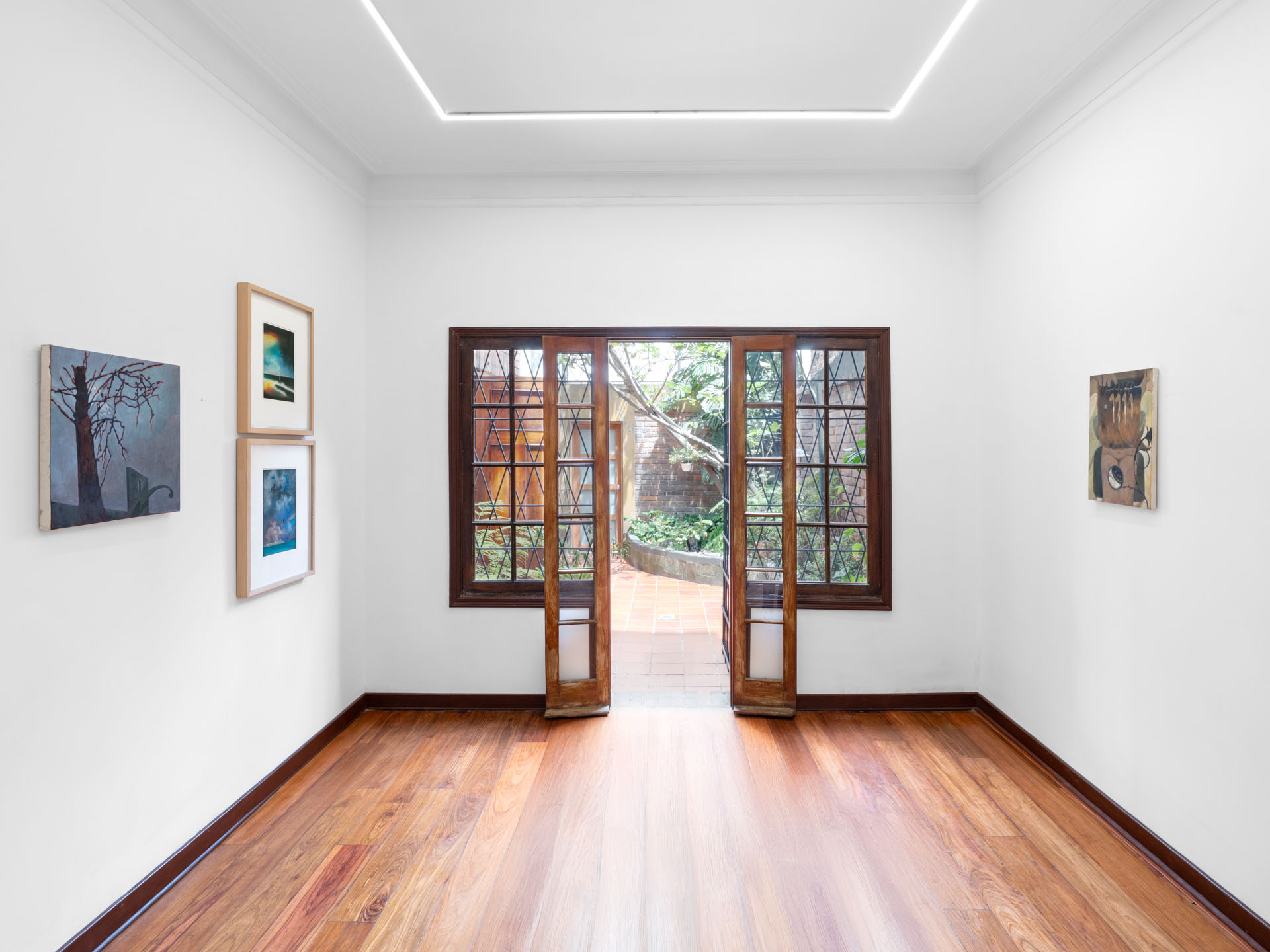
Antonio Imedio
& Felipe Barreiro
Pactos con sombras y fantasmas
July 11 – Sept 12 , 2026
Bogotá
text by William Contreras, curator
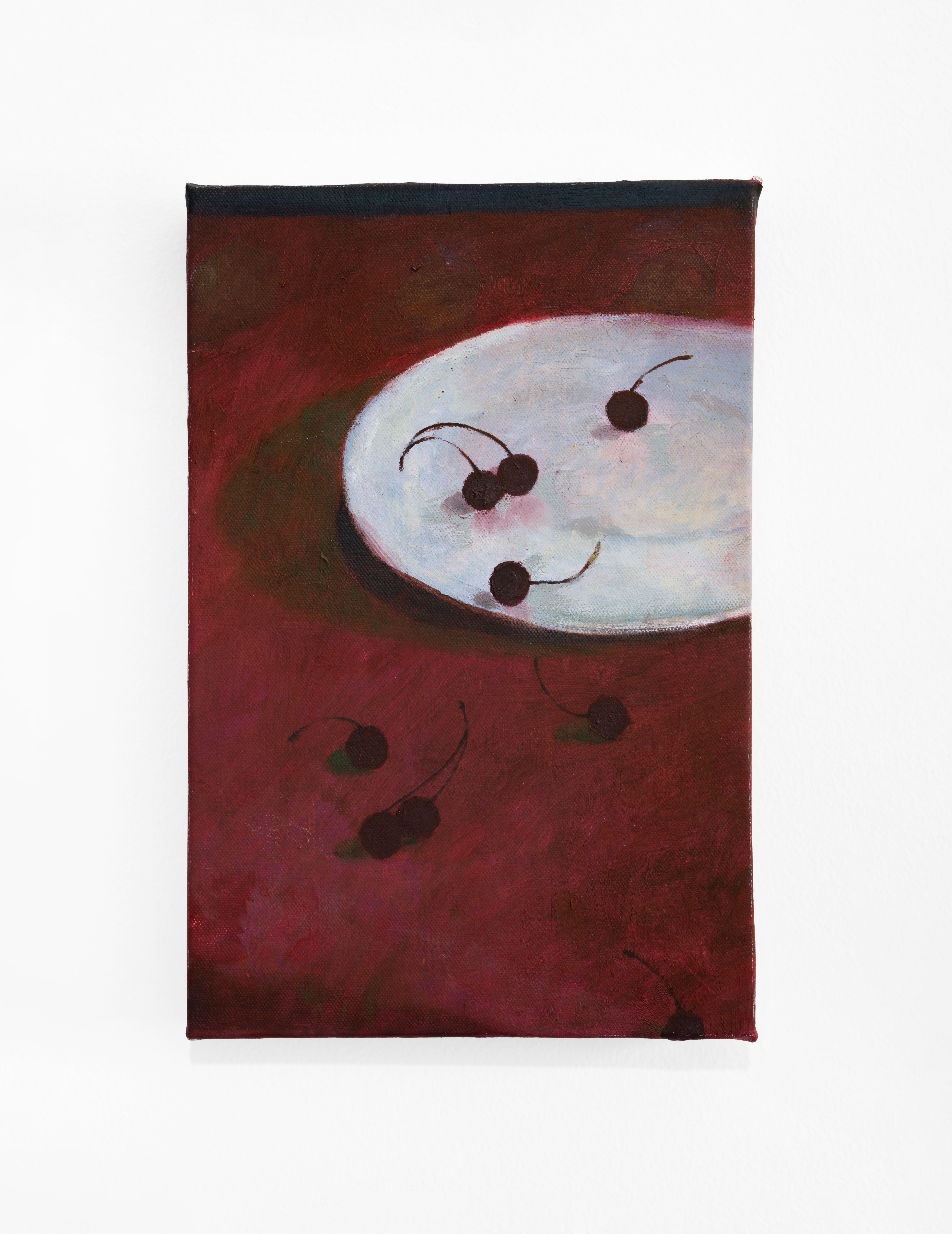
The muted sound of cherries rolling across a table. The lingering warmth of a body that has just left the bed. Someone moving behind a door. The certainty of something we cannot quite see, yet intuit through a shadow, a sound, or an almost imperceptible shift in light. These are not extraordinary apparitions, and yet they seem to exceed the ordinary limits of certainty.
Painting has long served as a way of giving form to such uncertainty. It does not seek to reproduce the world faithfully; rather, it accompanies the viewer, expanding perception and inviting a deeper surrender to seeing. Before a painting, we are always asked to look again: to listen with our eyes, to touch through our gaze, to recognise textures that belong as much to memory as to matter. The painted image offers an experience that extends beyond what is visible. Although everything enters through the eyes, an essential part remains intuitive and elusive: subtle tonal shifts, almost imperceptible decisions, the apparent chaos of a daring composition that nevertheless holds together with remarkable conviction.
Painting is also a conversation across time. Every painting bears the traces of those that came before it, drawing nourishment from the history of art while allowing that history to continue unfolding. Likewise, the painter works by intuition, making each gesture in response to the previous one, constantly searching for the moment to stop, before the work becomes buried beneath unnecessary layers of paint. Perhaps this is why the history of painting does not advance in a straight line. It repeatedly returns to the same questions, transforming them without ever exhausting them, as though its task were to remain in perpetual motion, ensuring that we are never left behind. In this sense, the work of Antonio Imedio and Felipe Barreiro participates in a dialogue far broader than that of a single generation or a particular geographical context.
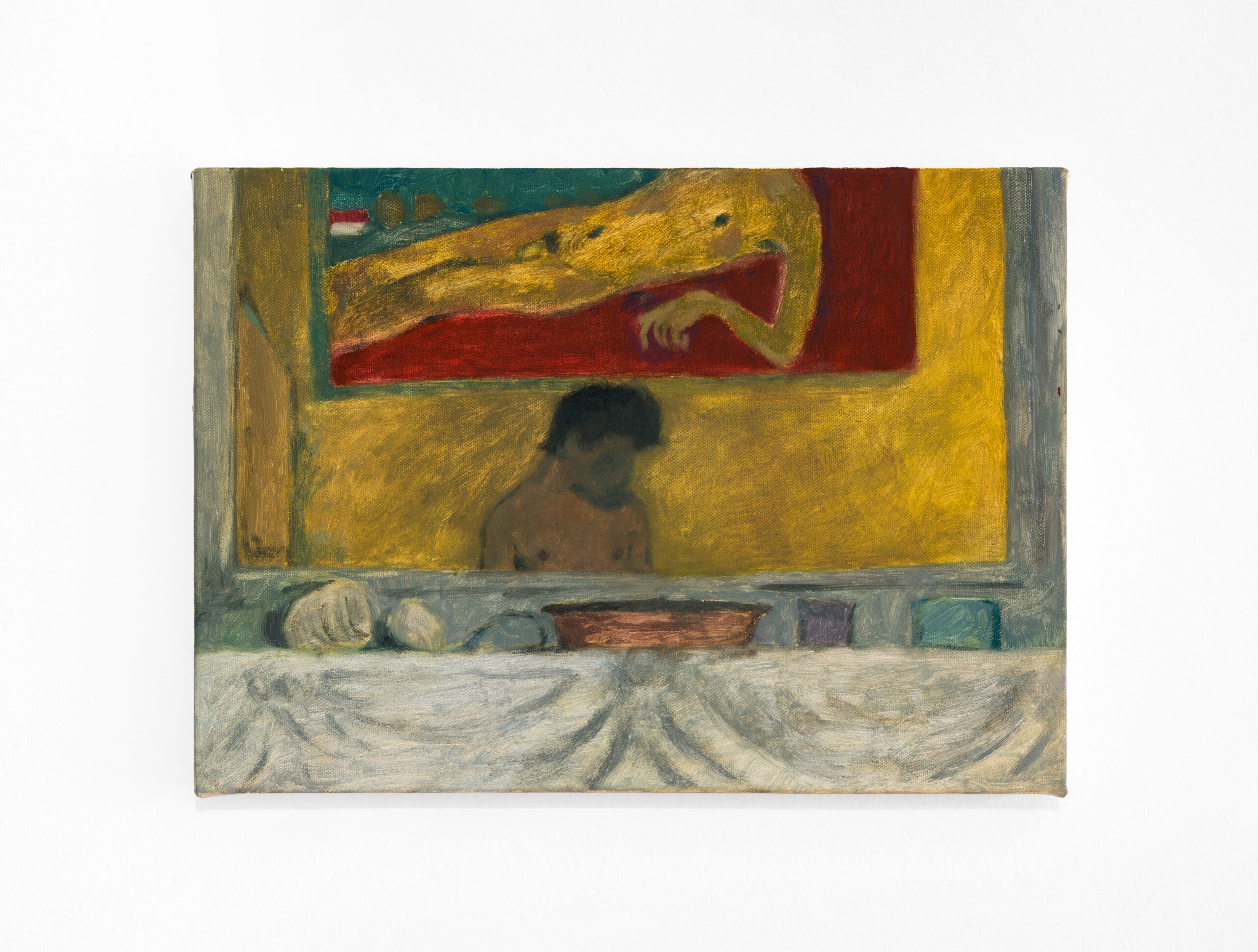
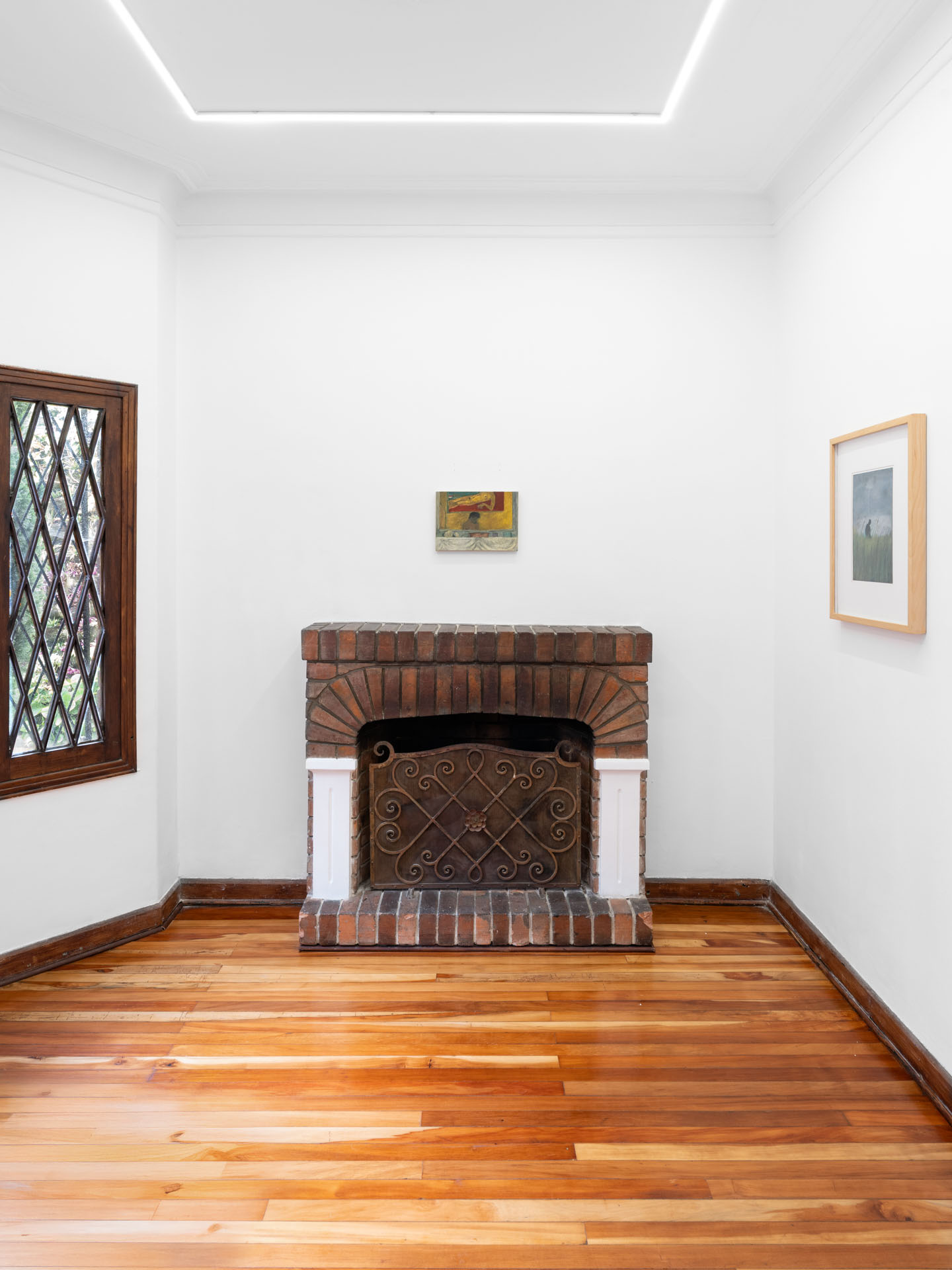
In one of Antonio’s paintings, the shadow of what appears to be a young man seems to be discovering his own body, while the upper part of the composition is occupied by the nude figure of an adult man. We do not know whether he is asleep, resting, posing, or fantasising, for the lower part of the scene extends beyond the edge of the canvas. Nor do we know the relationship between these two figures. Yet the downward gaze of the protagonist alludes to a hidden action, one that remains beyond our understanding. The image derives its strength precisely from this uncertainty.
The painting draws inspiration from Woman in the Bath by Pierre Bonnard, the portrait of his wife Marthe in which the model’s body appears fragmented and reflected in a mirror, preventing the viewer’s gaze from ever fully grasping it. In both paintings, we find ourselves observing an elusive identity, a veiled body, an idealised figure that, through its reclining pose and quiet eroticism, lies almost indifferently in the background of the scene. In this respect, Antonio does more than simply quote Bonnard. He extends a pictorial question that has remained open for more than a century: a question concerning the body, intimacy, and reflection.
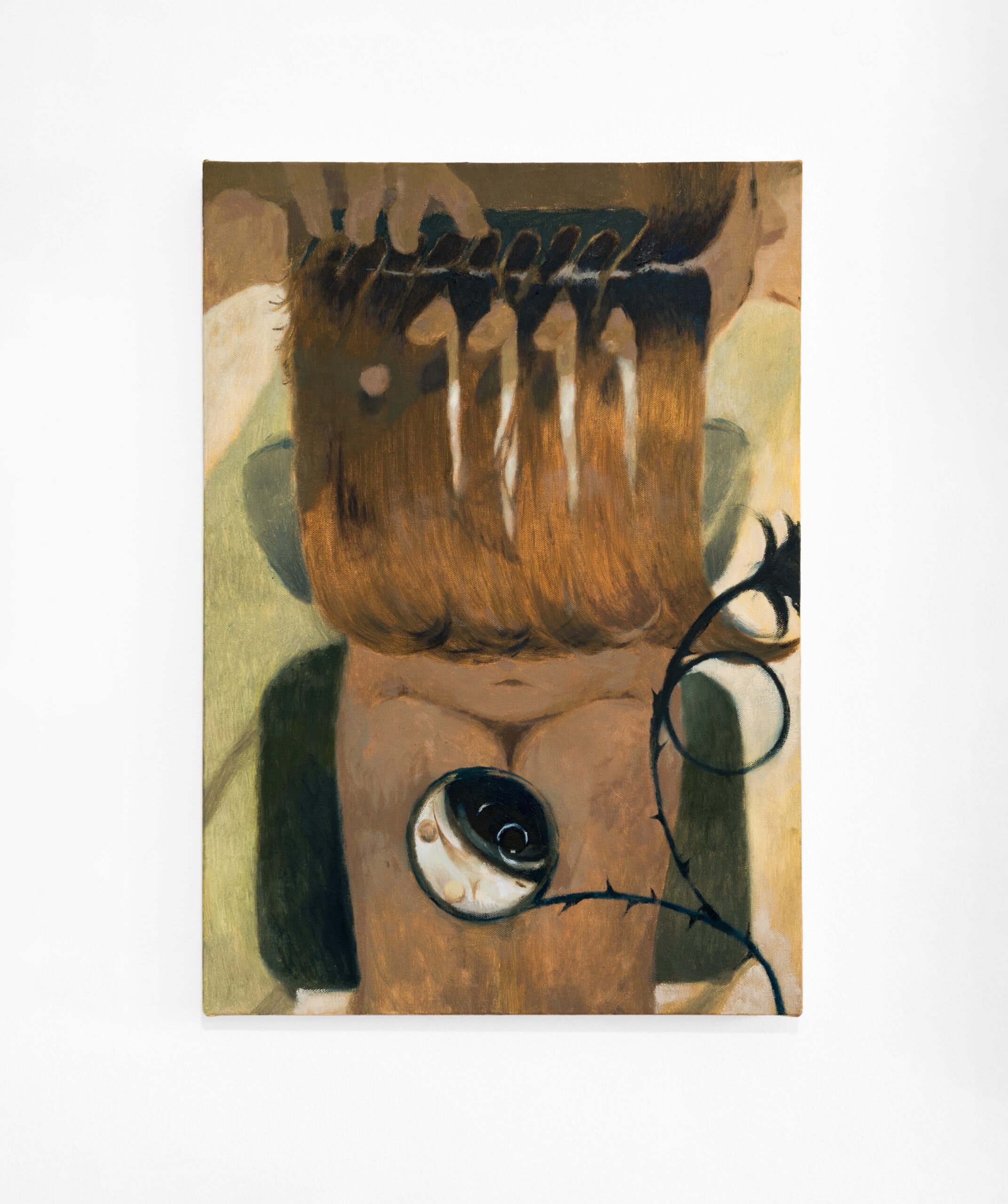
A small painting of an unmade bed, upon which two seemingly abandoned pieces of fruit rest, presents the piece of furniture as a silent stage for human emotion. Desire and dreams are condensed there, preserved in the memory of bodies that have left their imprint upon the crumpled sheets. Another canvas, which at first appears to be an abstract composition, gradually reveals itself, upon closer inspection, as an extreme close-up of the scalp of a woman combing her hair. In several of his paintings, Antonio seems to question the privileged position traditionally occupied by the painter as observer. His gaze moves with curiosity and unexpected intimacy, inhabiting the subtle eroticism of attentive looking, the infinitesimal distance between the observer and a body that never fully surrenders itself to representation.
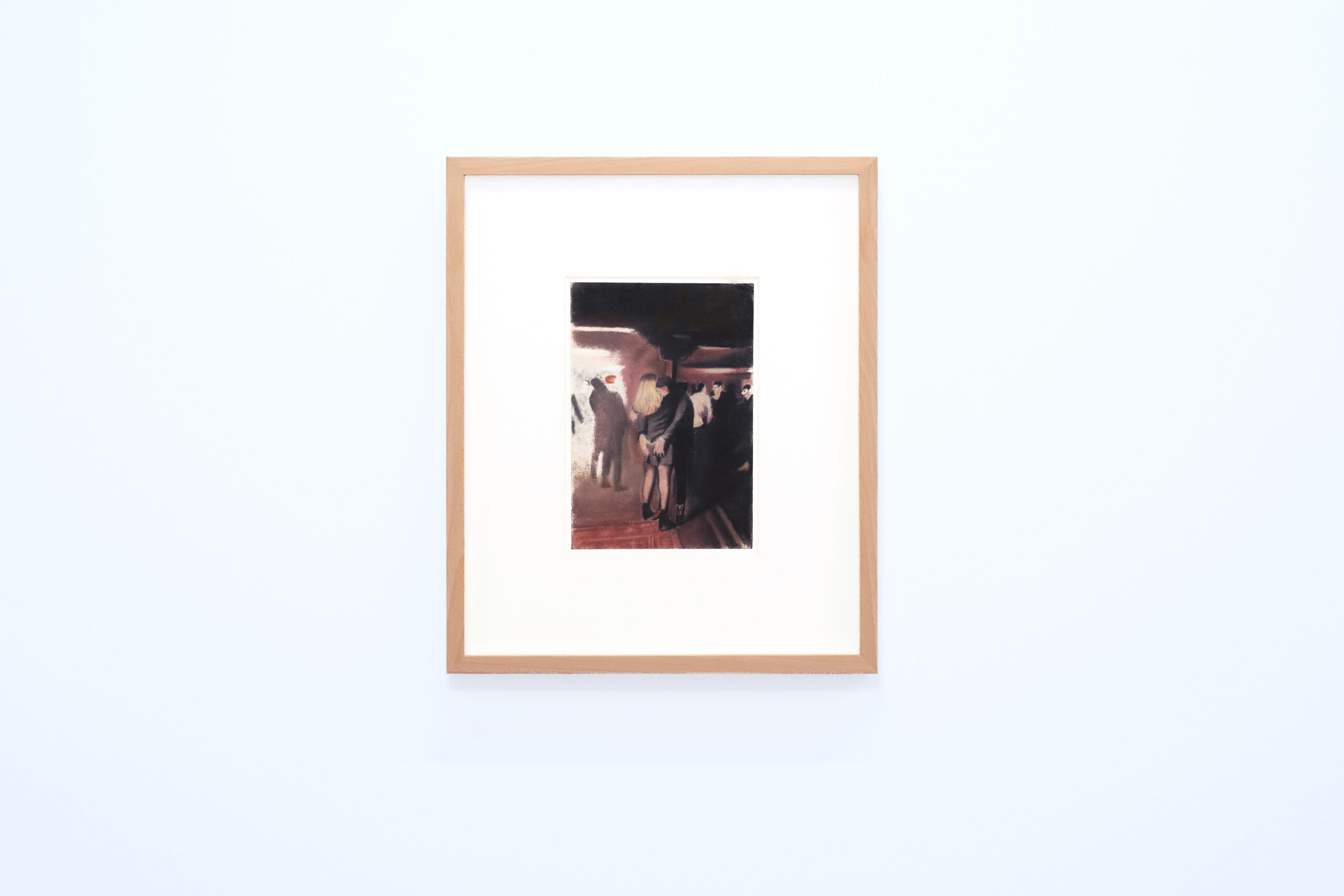
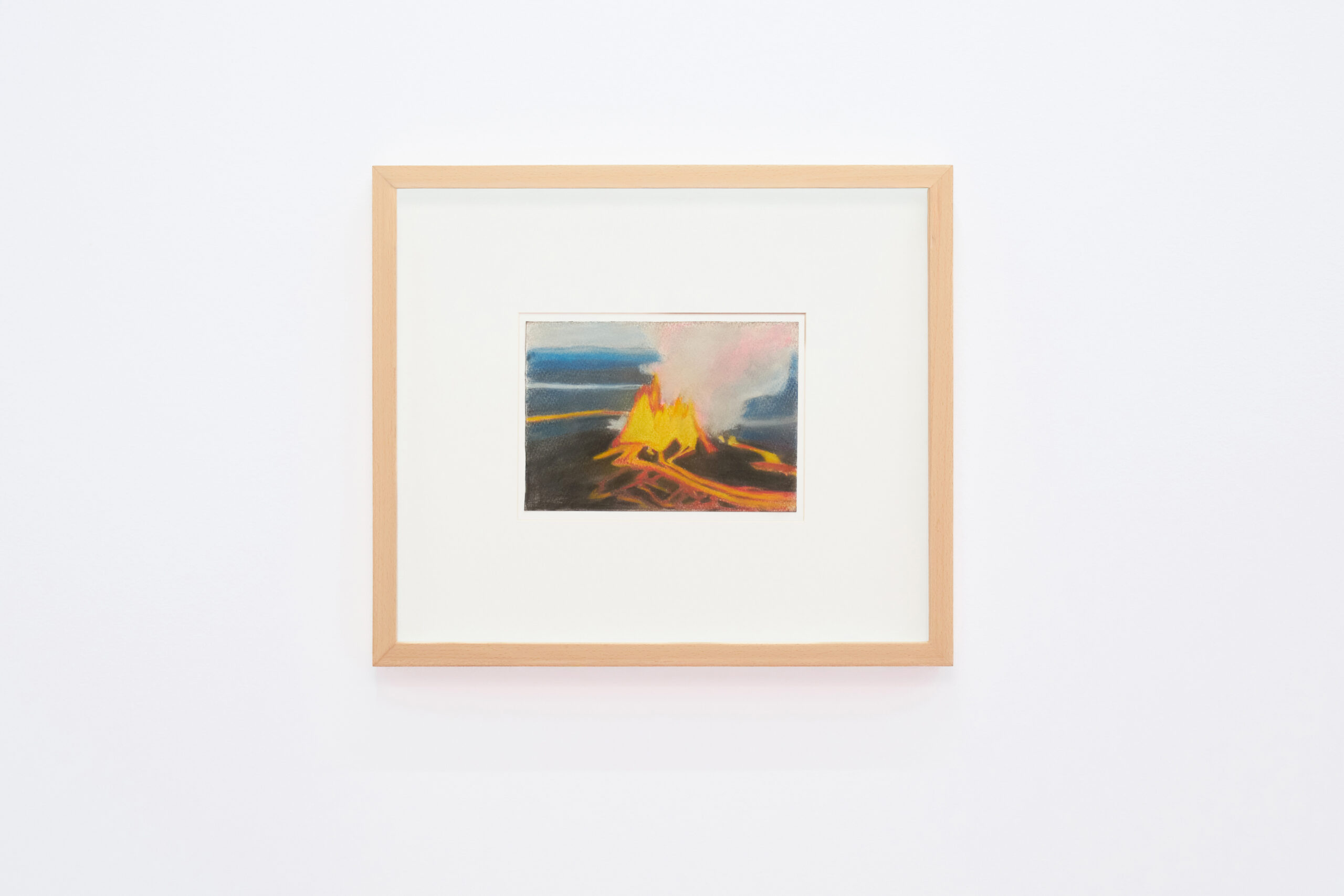
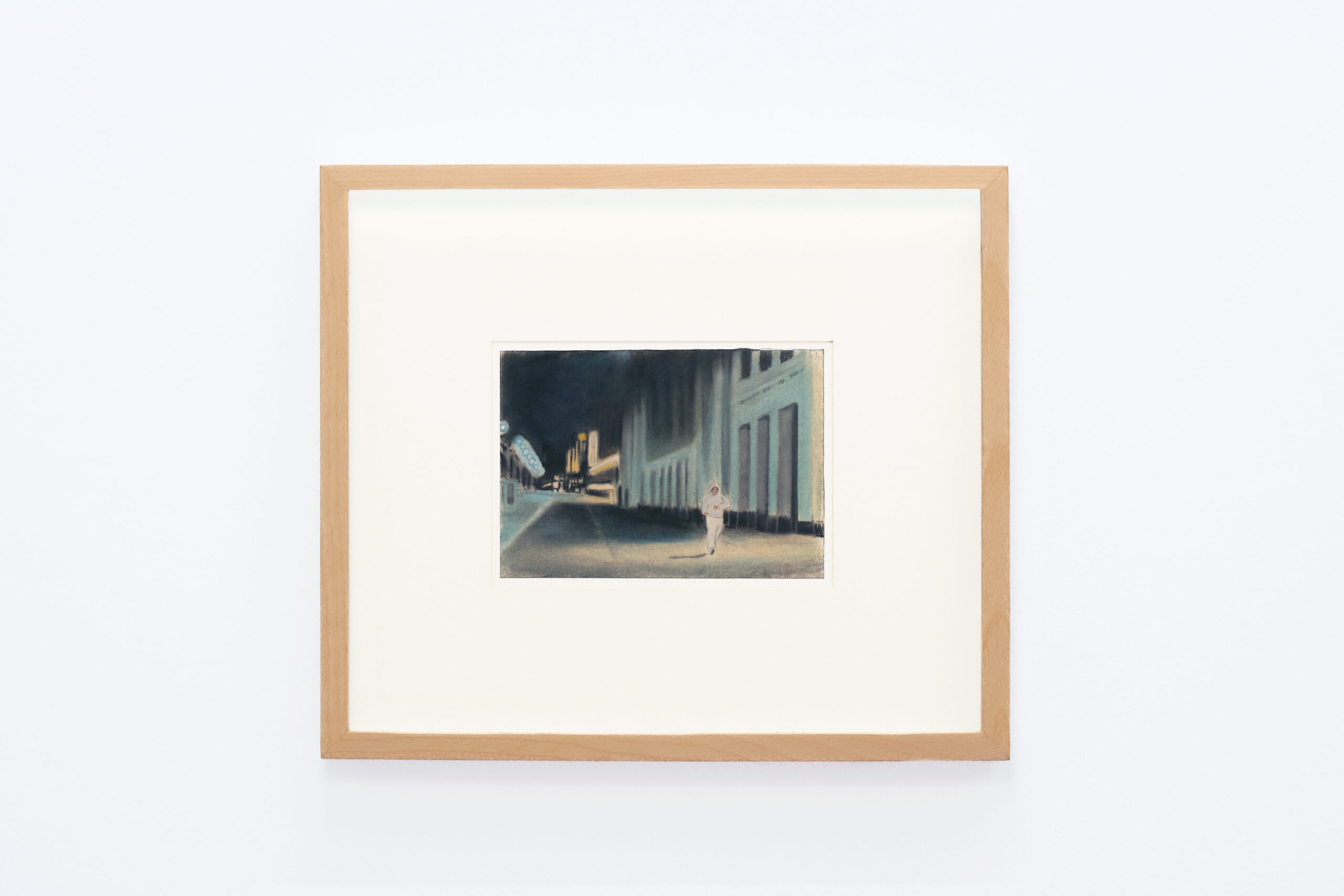
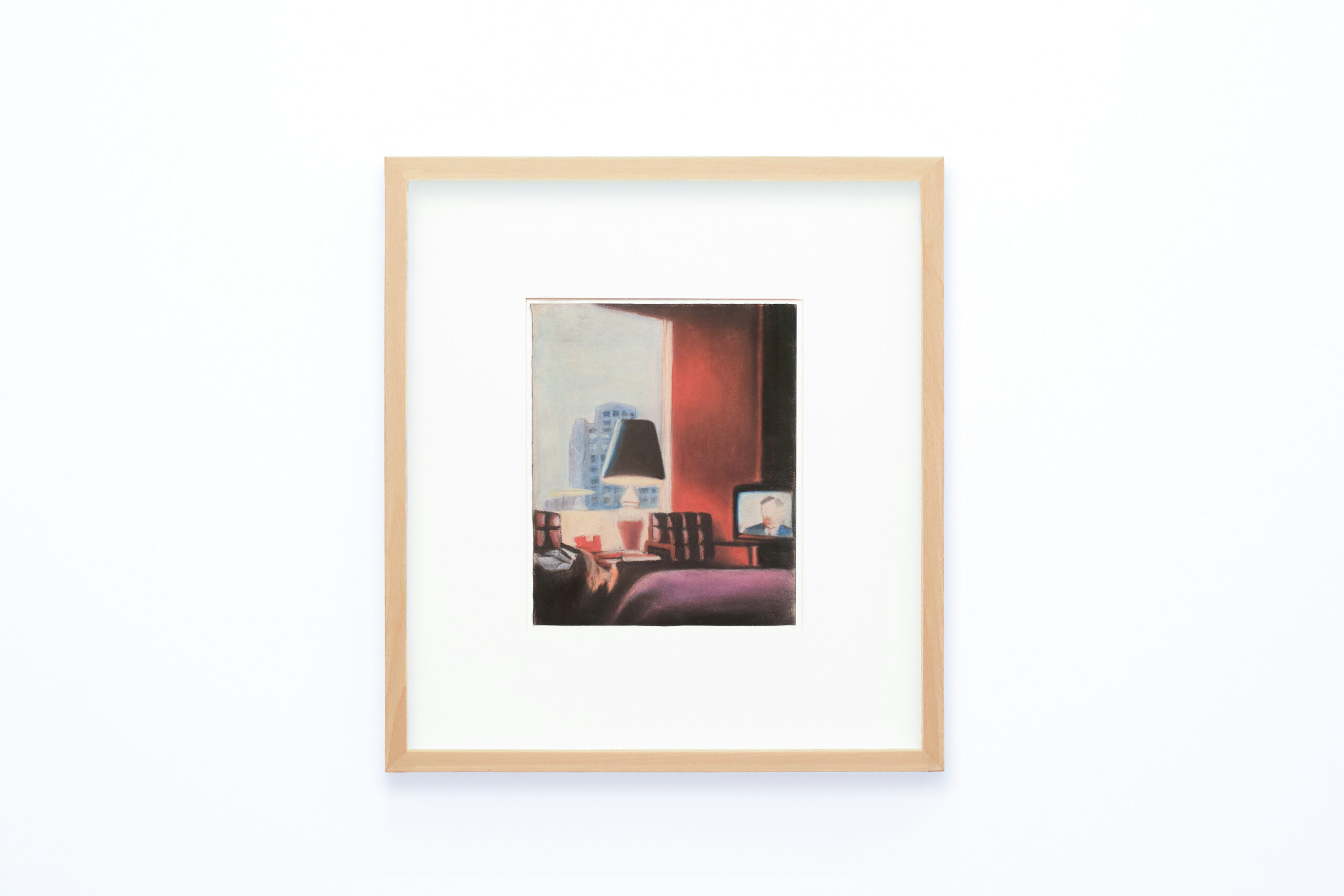
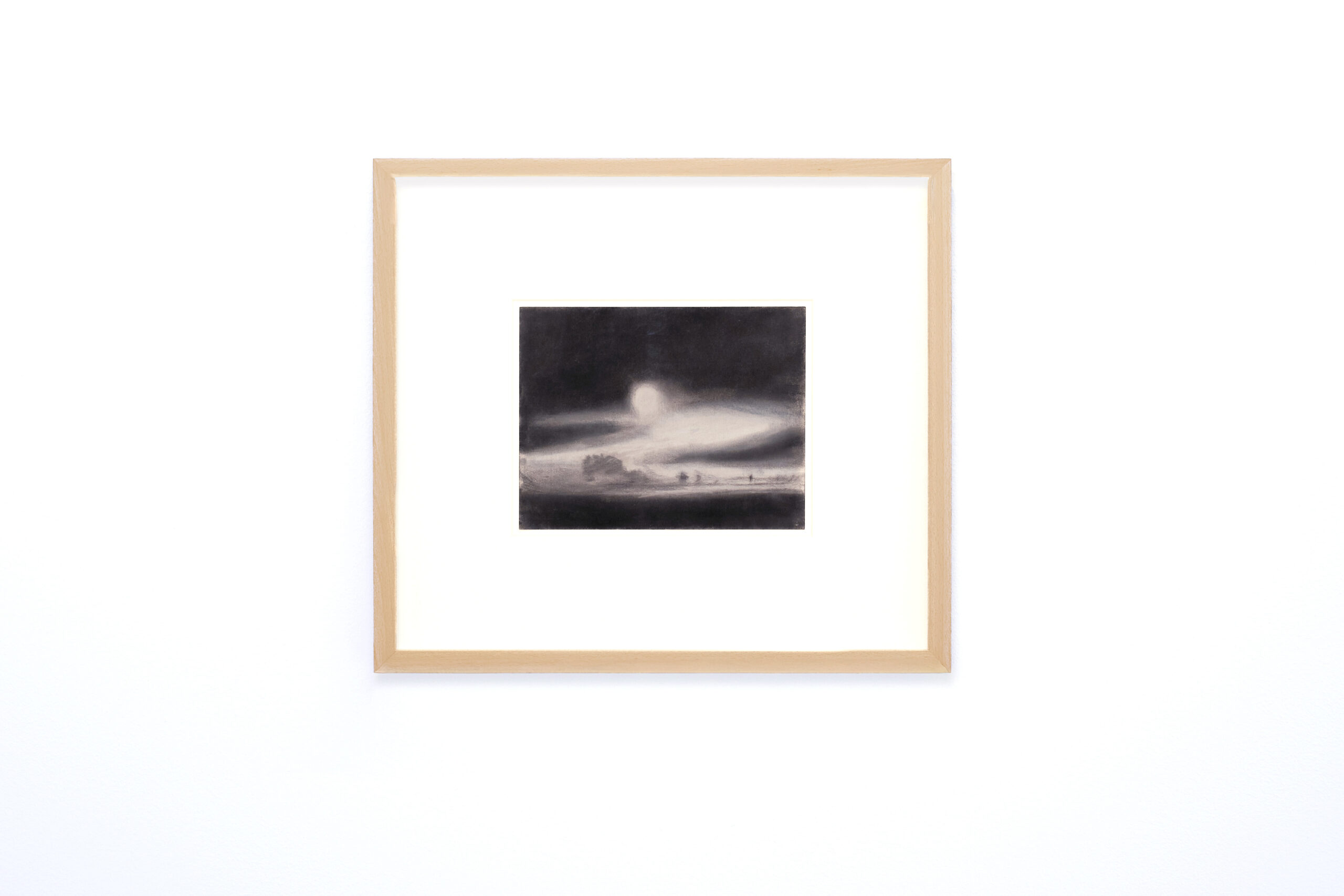
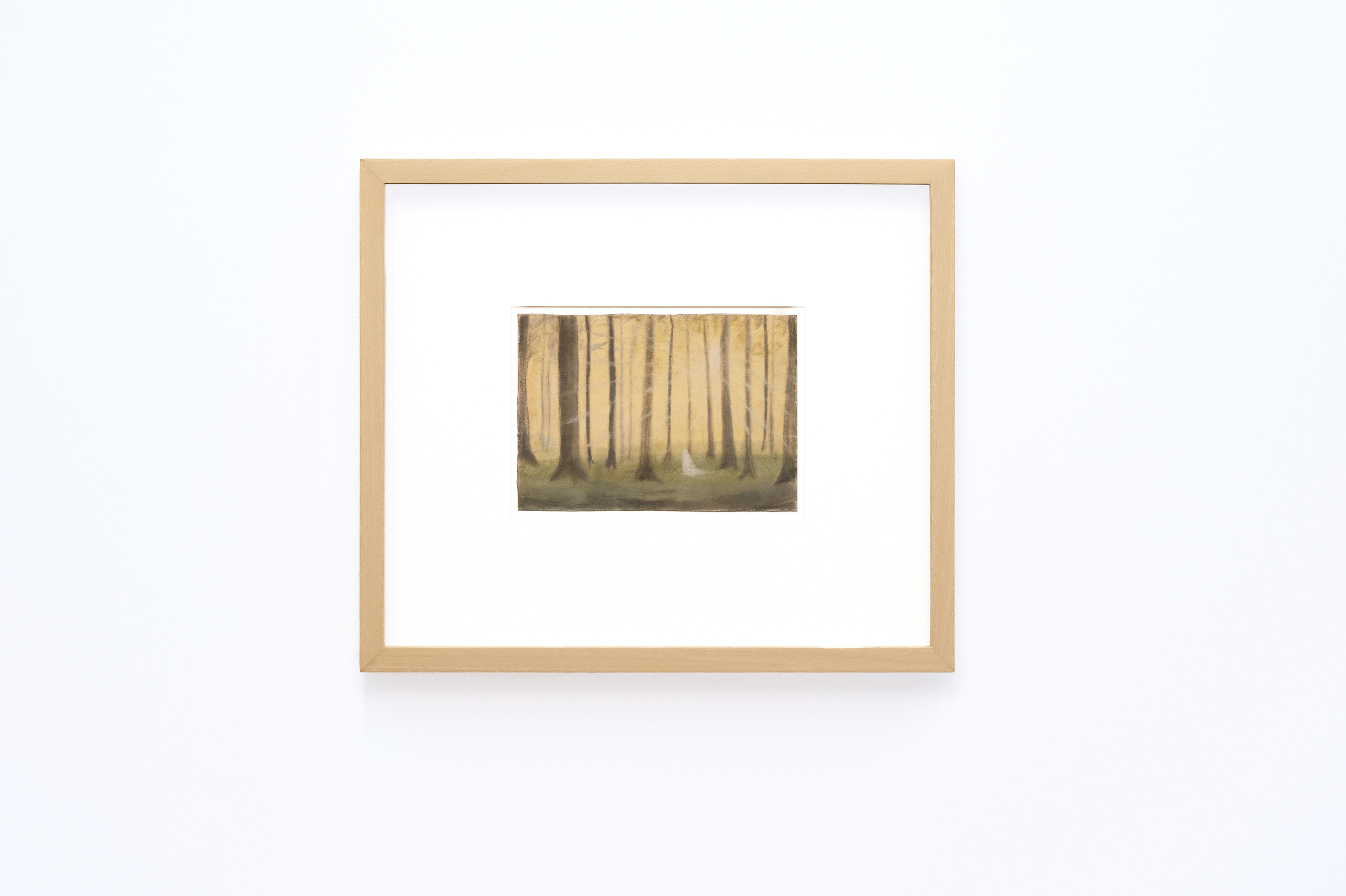
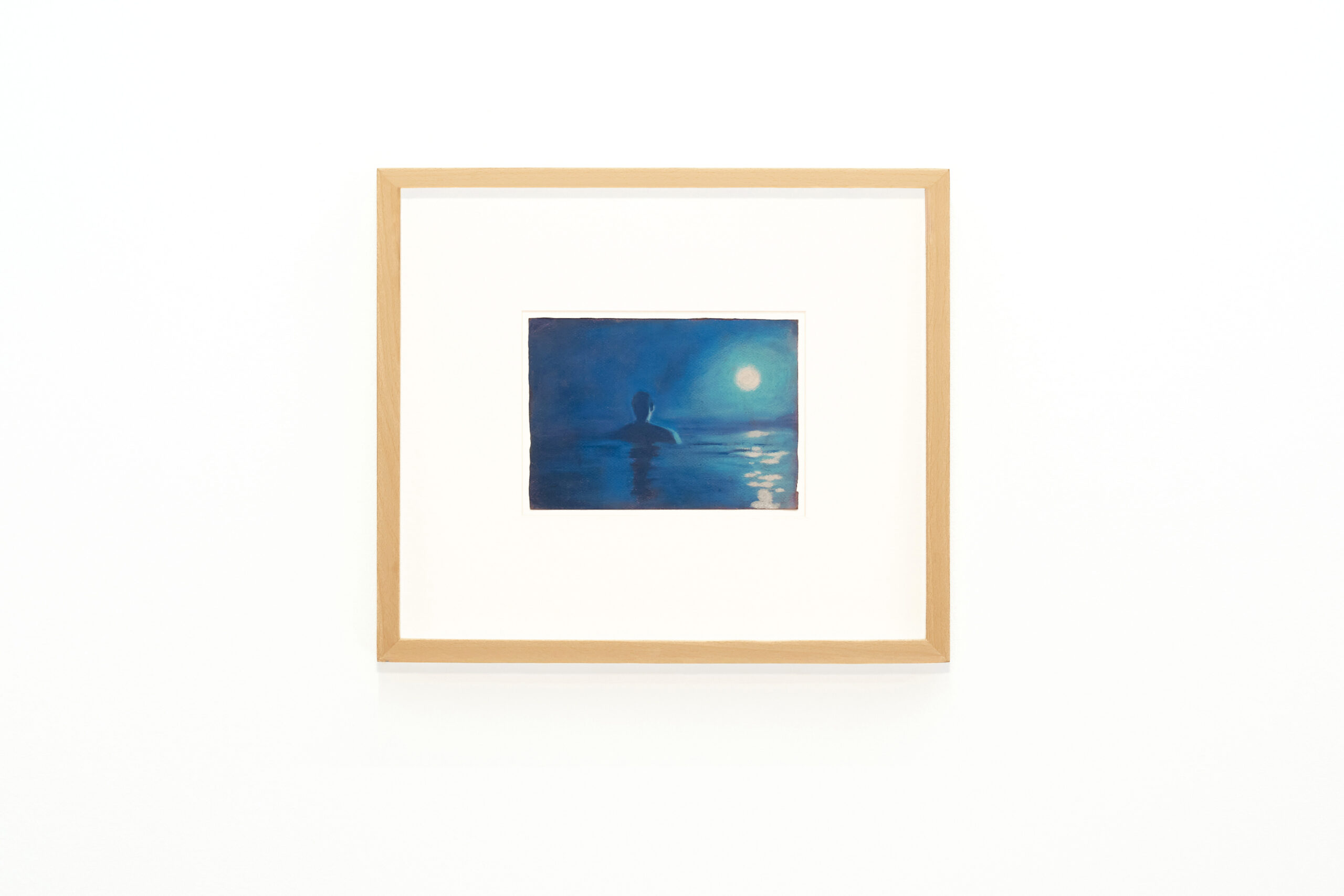
A similar shift in perspective also runs through the work of Felipe Barreiro, who employs dry media traditionally associated with drawing, yet approaches them in an unmistakably painterly manner. Executed with the energetic immediacy of pastel, his landscapes convey an urgency to preserve experience before time dissolves it. Some of his subjects, melancholic without relinquishing their dramatic intensity, are imbued with an atmospheric quality created through the accumulation of delicate layers and subtle tonal variations. These works resonate with two seemingly disparate references: cinema and German Romanticism. Despite their apparent distance, both share a profound affinity in the way they conceive the relationship between landscape and inner experience.
Romanticism fundamentally transformed the role of landscape in art, turning it into a space of contemplation in which the visible world could reflect the inner life of the individual. That sensibility, however, no longer belongs exclusively to painting. Photography, and above all cinema, have absorbed this way of seeing, transforming it into a shared visual language of introspection. Today we recognise certain landscapes, atmospheres, and solitary figures as images of contemplation because they belong to our collective visual memory. Felipe’s work is rooted precisely in this contemporary condition. Rather than attempting to revive Romanticism as a stylistic tradition, his practice engages with an enigmatic visual language that cinema has already brought into the realm of the familiar and the widely recognisable.
Felipe works on an intimate scale, driven by a distinctive compulsion through which hundreds, even thousands, of moments are preserved within his archive of images, each recalling the quality of a snapshot. The construction of this vast and heterogeneous body of memories feels remarkably refreshing in the context of contemporary art, which has become increasingly accustomed to highly specific, academicized rhetorics and research-driven practices.
There is something fundamentally untamed in the artist’s approach: in his intuition, in his refusal to adopt a fixed position regarding the meaning of his work, and in the steadfastness with which he continues his practice, pursuing it with both intensity and meticulous care.
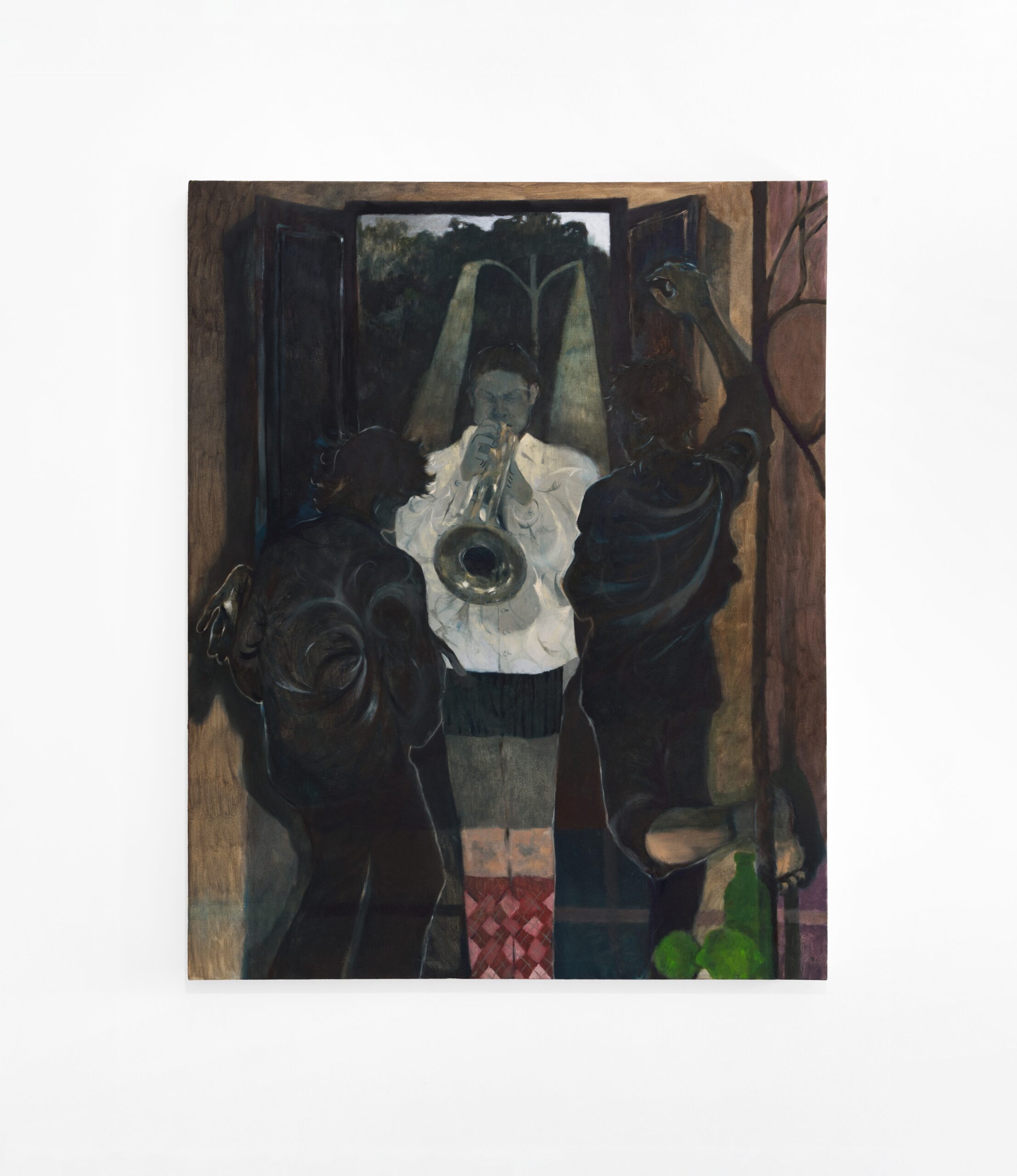
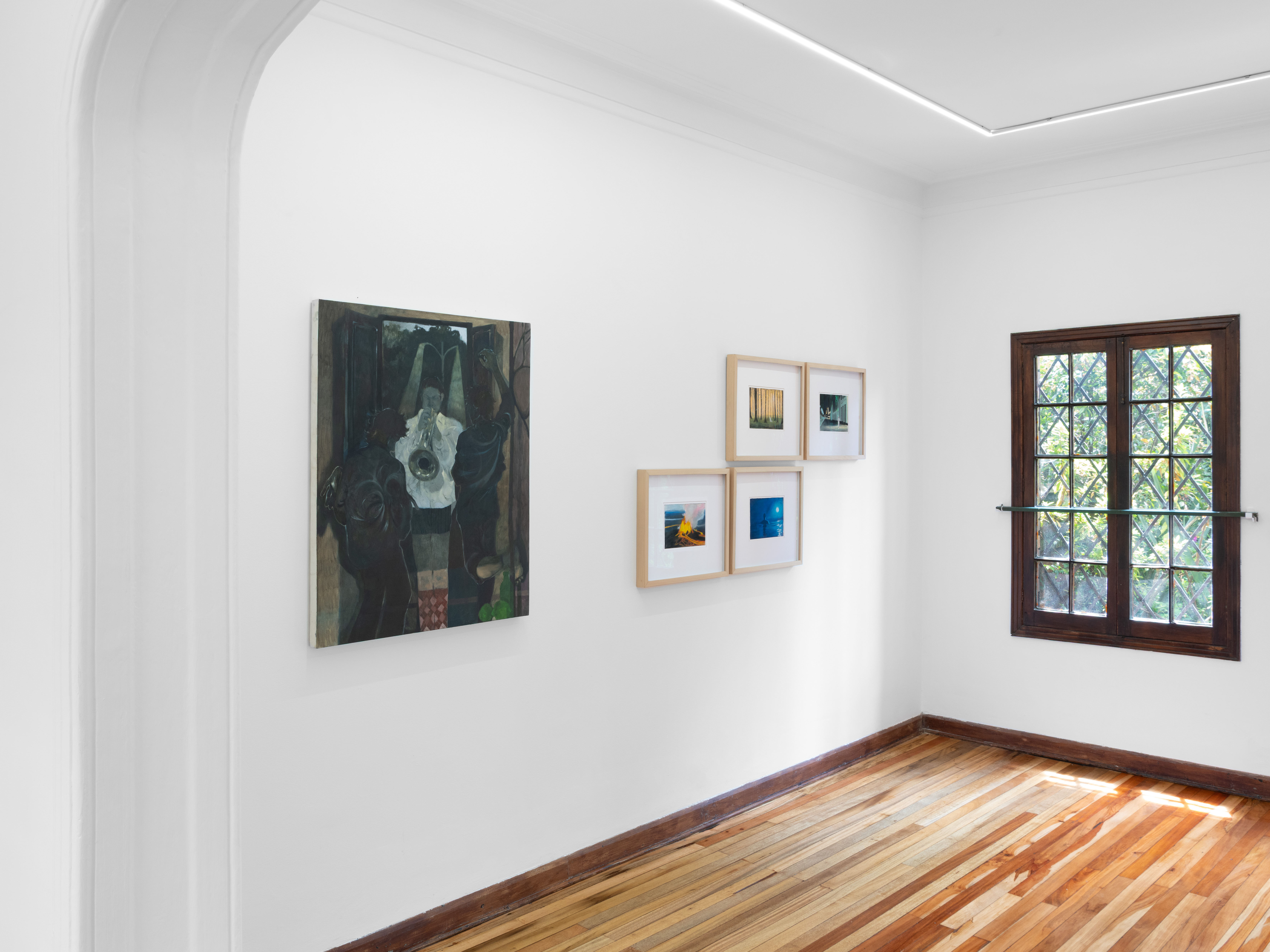
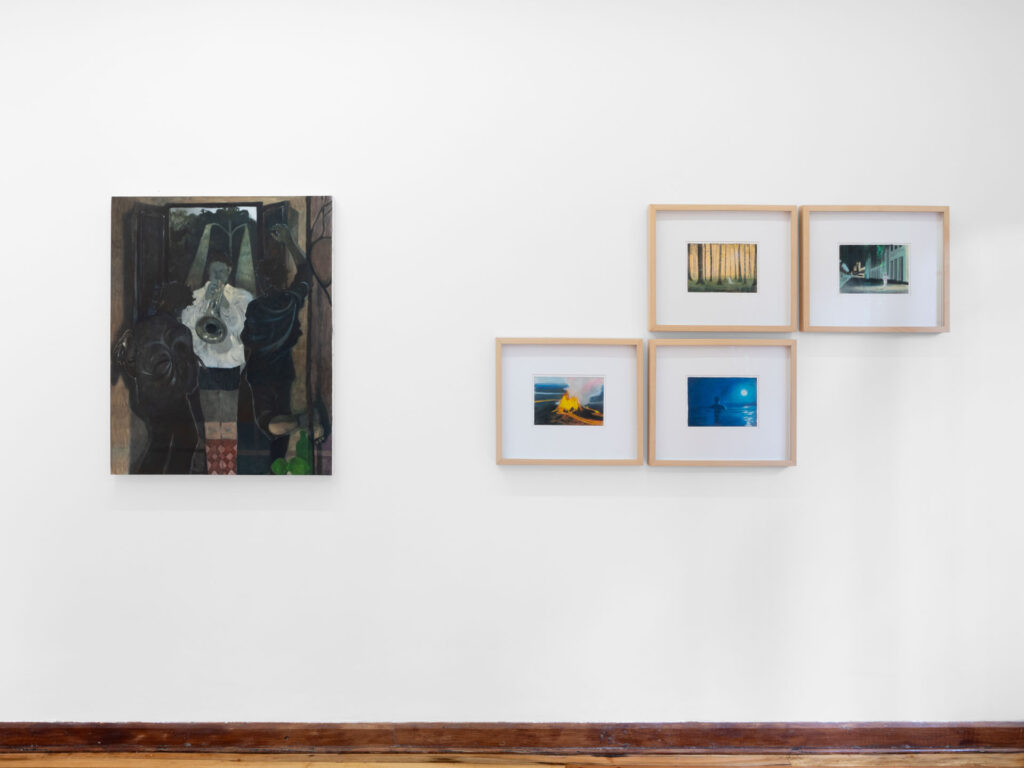
Antonio and Felipe frequently choose scenes that appear entirely ordinary, a room, storm clouds, a nocturnal landscape, or an empty bed. Yet these images become thresholds, opening onto questions of desire, memory, and time. Such reflections belong not only to stillness and contemplation, but also to celebration, festivity, and abandon. Dance and music emerge as forms of self-construction and self-affirmation, moments in which identity is shaped through the presence of others. Antonio’s painting of the trumpeter captures one such instant as a genuine landmark of lived experience, where collective joy becomes another path towards self-discovery.
The apparent simplicity of these subjects is subtly disrupted by small gestures and fleeting apparitions that bend the narrative, prompting us to wonder about the hidden story that remains untold. As we glimpse ghosts in an open field or strange figures levitating within a storm, we realise that a silent and unknown protagonist occupies the true centre of the exhibition. This figure does not signify an absence; rather, it marks an encounter that has not yet fully taken place. By preserving the shape of bodies while stripping away their individual features, the silhouette ceases to belong to any one person and assumes an archetypal presence.
From this perspective, it becomes clear why shadows feel so closely related to the notion of the spirit, not because they belong to a supernatural realm, but because they inhabit the threshold between what is visible and what is absent. To paint a shadow is to attempt to represent that which, by its very nature, resists becoming a complete and fully graspable image.
A quiet ambition unites the work of both artists: a profound confidence in the still-unexplored possibilities of painting. Antonio Imedio and Felipe Barreiro continue to ask what the painted image is capable of doing, something that no other artistic language can perhaps accomplish in quite the same way. A painting continues to unfold long after it has been completed. The shadows, bodies, and landscapes gathered in this exhibition do not seek to impose a fixed meaning; rather, they keep an experience open. Within them, we may still sense that someone has just left a room, that a landscape can return an unfamiliar part of ourselves, or that a shadow may reveal more than a portrait illuminated in full light.
It is there, in that space where perception begins to merge with memory, where different temporalities become inextricably entwined, that painting continues to endure.