It sometimes happens, through a convergence of circumstances, a journey, that one finds oneself on an island. One has chosen to cast off, to set out to sea and, for a time at least, to cut oneself off from the world. The great continent has been left behind, with its tangled web of borders and networks, its overly busy, mingled, talkative societies, the noise of their incessant disputes. One has withdrawn, quite literally.
On an island, the world suddenly assumes manageable proportions. It becomes possible to conceive of an end and a beginning: infinity no longer troubles us. Pascal and his complicated philosophical anxieties are forgotten. A relationship with our own body, also clearly bounded in space, can finally be established. Resources are limited, water and food, and one learns to live more simply. Immediate pleasures are better appreciated, the taste and color of things. All of this leads to a deep and tranquil sleep.
Of course, there are islands so small that one can take in their entire circumference at a glance. Mont-Saint-Michel, for example, in a certain sense, once the tide has come in. Sugarloaf Mountain, Île aux Bénitiers, somewhere in the Indian Ocean. Others, by contrast, are so large that one forgets they are islands at all, Corsica or Sicily, Réunion or Hong Kong. One need only gain a little height, a building, a hill, and the sea immediately reappears, the reassuring boundary it draws along the horizon. One can watch the sun rise and set, tracing its full course across the sky. Others still are islands in name only, Rhode Island in the United States is not one in the geographical sense, nor is that “New” England in which it is located. But it hardly matters.
The spirit of island inhabitants, quite naturally, has something insular about it. That is to say, it is marked by a concern for independence, a certain stubbornness. A very particular character distinguishes it from that of mainland people, and they generally make a point of it. This does not prevent them from being welcoming. They simply know who they are. They know their limits.
Conversely, one might say that wherever such wisdom is found, anything, any idea, any place, any moment marked by this spirit has the right to be considered an island. A space of withdrawal, a haven finally proportionate to a self seeking to find a path that suits it within the vast universe, a more defined framework in which it can fully unfold.
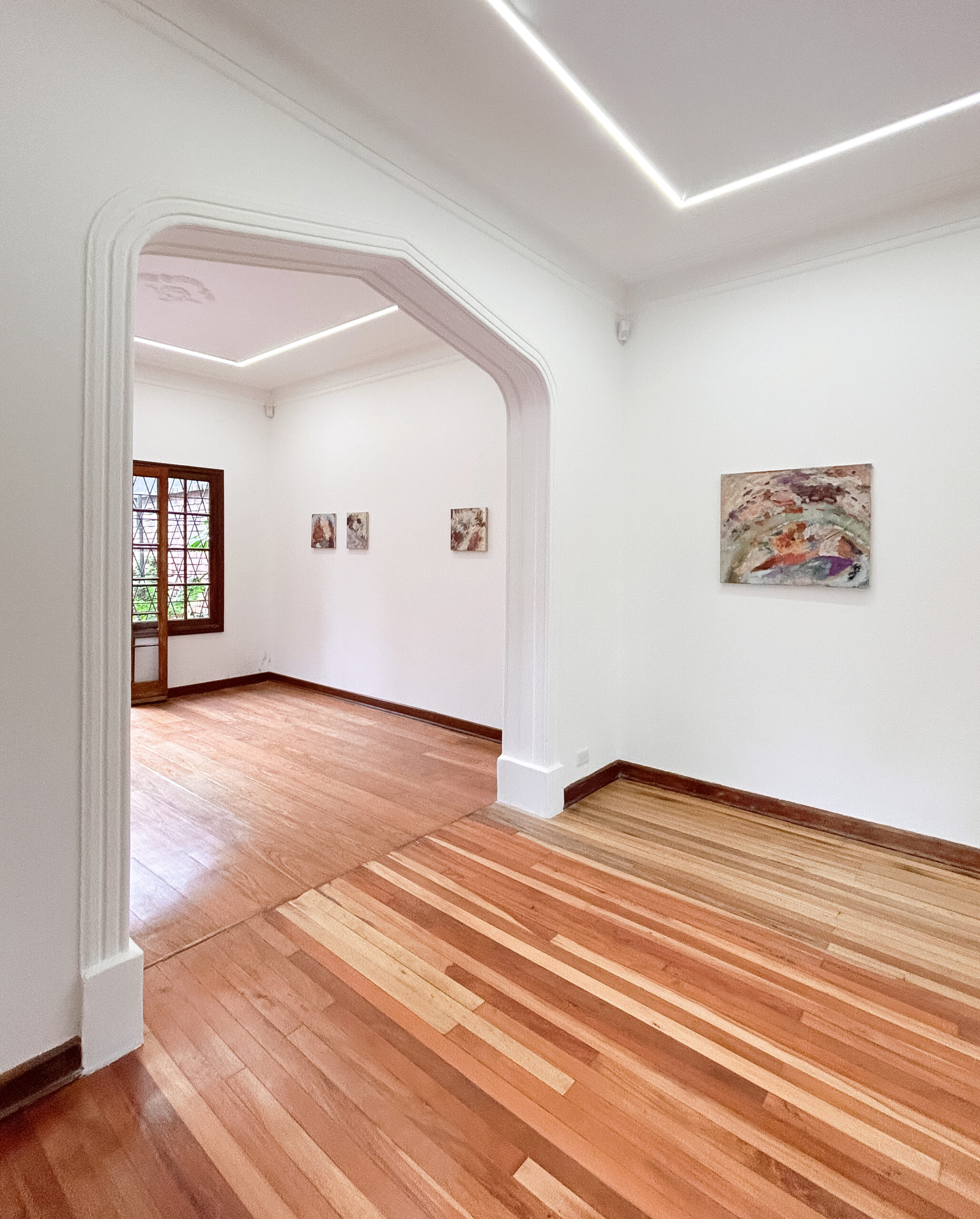
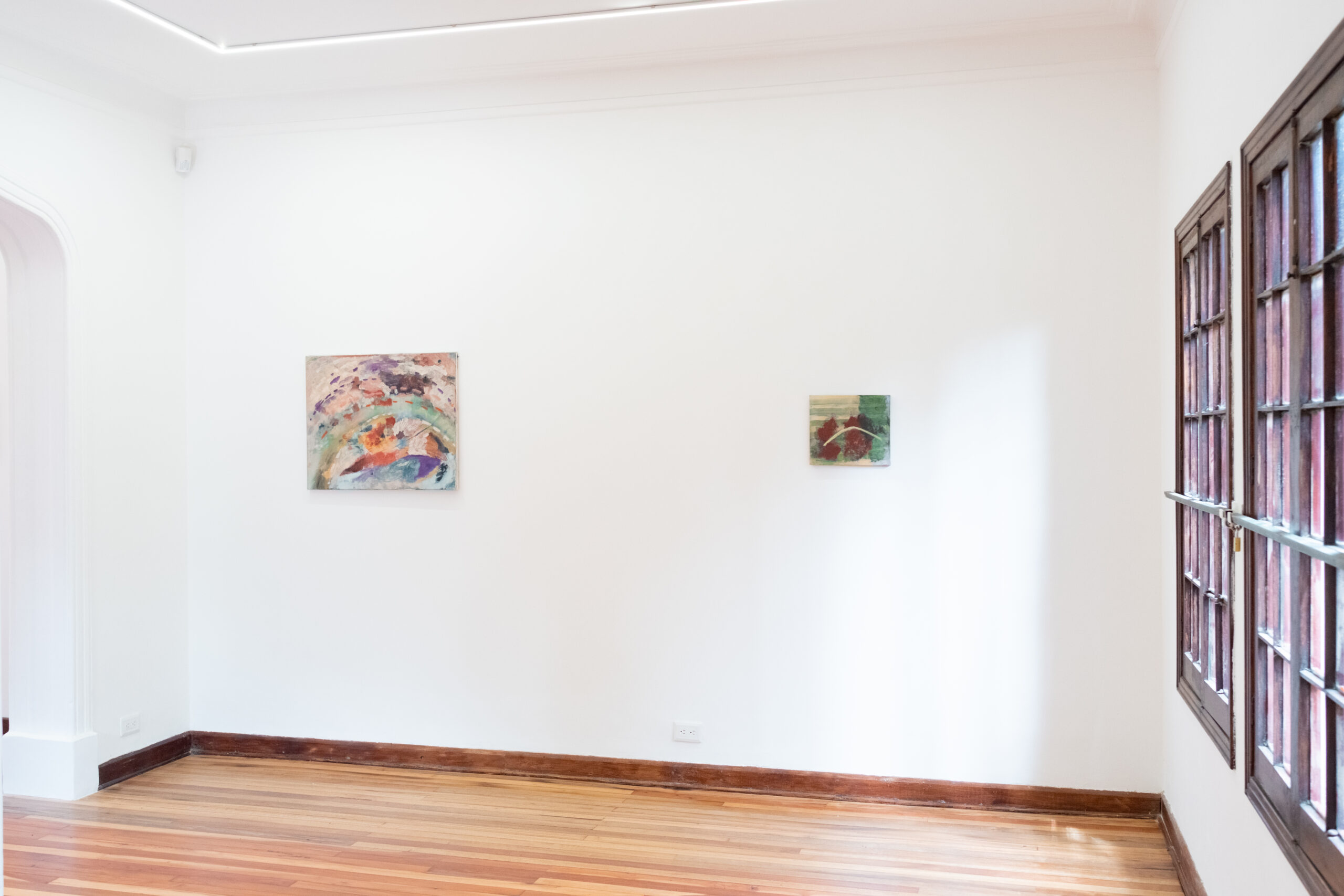
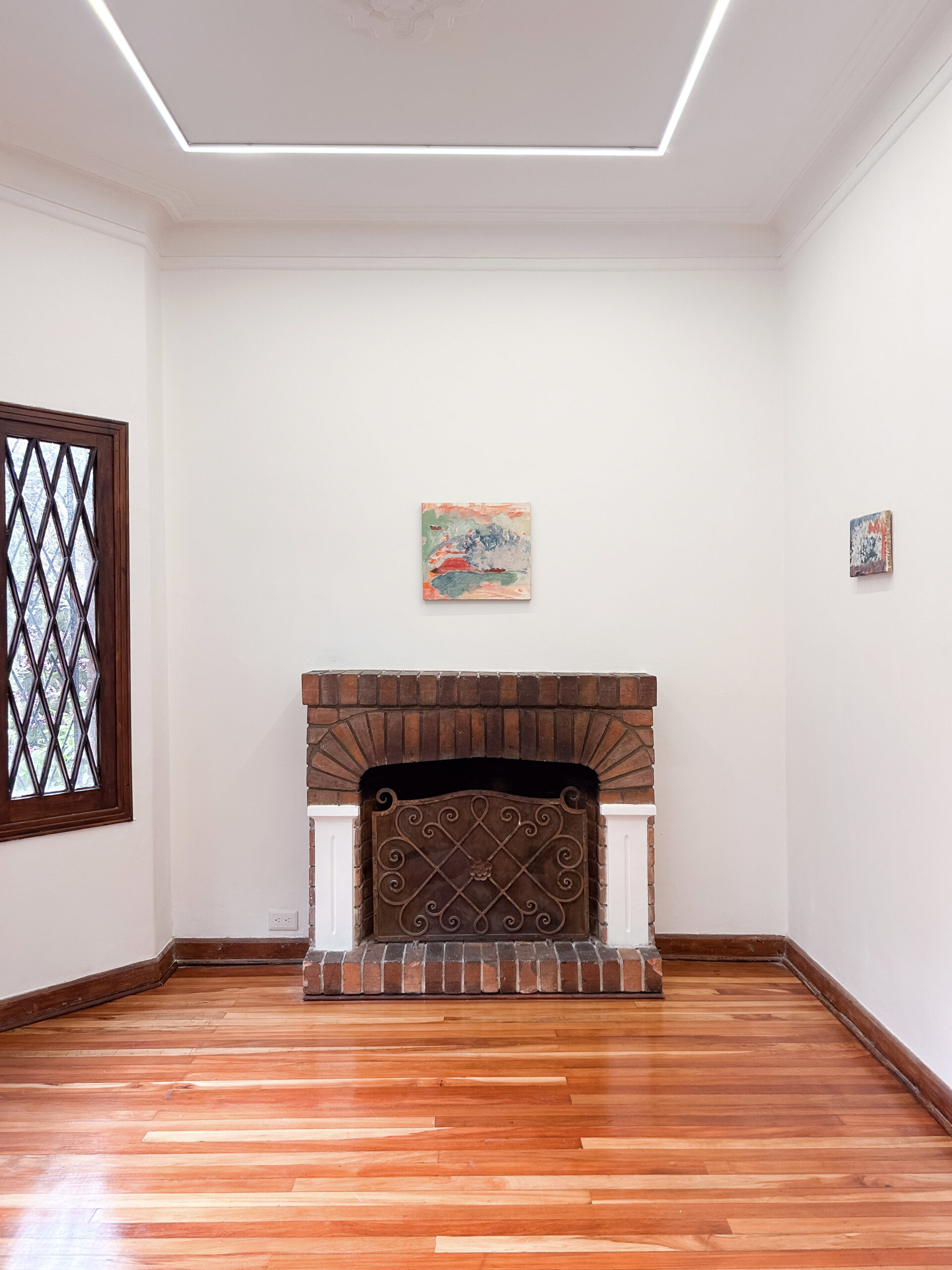
The studio of Lucas Talbotier, wherever it settles, is for me a kind of island. These days, magnificent exotic plants that he grows in pots stand beside a large window, facing the tall towers of La Défense and the mineral expanses of the Parisian suburbs below. His small canvases, aligned horizontally on the wall facing this landscape, in turn form a curious archipelago, where walks, emotions, and all the love the painter has retained for places and people, as well as for the work of certain artists who came before him, take on the colors and forms of a grammar he patiently refines over the course of months.
It is the memory of a walk in the forest, or the warmth and salt of a swim in the sea. It is, somewhere against a cliff, a hollow in the rock where the waves rush in, churning, bursting into a thousand white droplets. The fatigue and excitement of a journey in Africa, the texture of rock paintings long forgotten; of a life in Asia, also lost in the folds of memory; of a semester in America, where one had to learn in English. A path that is also the line of a painting by Hollander. The silhouette of a tree that is no longer a tree, that is nothing but paint. The pleasure and the raw emotion that Lucas feels in rediscovering the trace that these moments and these things have left on his life, like beautiful colored islets.
selected artworks
Aucun profil détecté.